
Salmon Sperm, Exosomes, and Off-Label Cocktails: Separating Aesthetic Fads from Fact
I’m going to be direct about something most medspa marketing will never tell you: the aesthetics industry has a significant problem with overpromising, underreporting complications, and dressing up unproven treatments in scientific-sounding language.
Social media has accelerated this. A treatment goes viral, a few influencers post glowing results, and within weeks practices across the country are offering it — often before the clinical evidence catches up. Sometimes the science eventually validates the hype. Often it doesn’t. And sometimes patients get hurt in the gap between the marketing and the evidence.
We sell aesthetic treatments here, so I have an interest in you trusting this practice over the one down the street. What I’ll give you in return is the same assessment I’d give a colleague, including the parts where the answer is that we don’t know yet.
Do salmon sperm facials actually work?
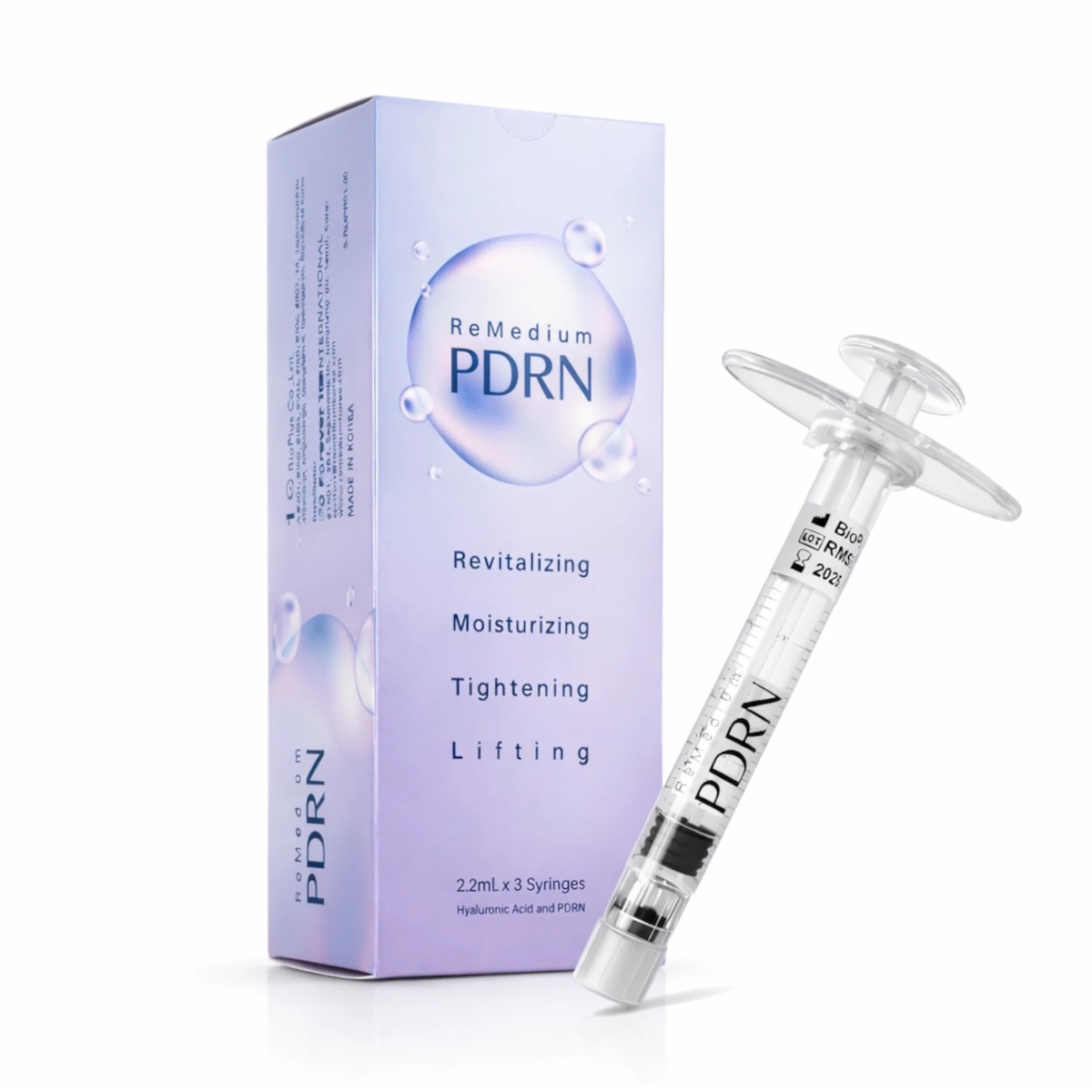
Despite the clickbait name, a “salmon sperm facial” doesn’t involve actual sperm on your face. The active ingredient is polydeoxyribonucleotide (PDRN) — purified DNA fragments extracted from salmon reproductive cells. PDRN activates adenosine A2A receptors, which in laboratory settings stimulates fibroblast proliferation, collagen synthesis and new blood vessel formation. The treatment has been used in South Korea for over a decade.
The biological mechanism is plausible. Laboratory work has repeatedly shown that PDRN and related polynucleotides enhance the proliferation and migration of human skin keratinocytes and dermal fibroblasts, and an animal study published in Annals of Dermatology in 2019 found improved wound healing in a diabetic mouse model.
Here’s what the social media posts leave out. The clinical studies are small, short-term, and often combine PDRN with other agents such as hyaluronic acid — which makes it impossible to work out which ingredient is doing the work. A 2024 review in the International Journal of Molecular Sciences surveyed the clinical literature and concluded that polynucleotides show promise but that standardised protocols are still lacking. A separate systematic review in the Journal of Cosmetic Dermatology, covering nine studies and 219 patients, rated the quality of that evidence as low to moderate and called for rigorous studies to validate effectiveness and safety. PDRN is not FDA-approved for cosmetic injection in the United States.
Fact vs. Fad: The biology behind PDRN is real and interesting. But “interesting biology” and “proven cosmetic treatment” are not the same thing. The leap from stimulating fibroblasts in a petri dish to meaningfully improving your face involves a lot of steps that haven’t been clinically validated yet.
We use PDGF+ topically with microneedling, which is the delivery method with evidence behind it. We don’t perform intradermal PDRN injections, and we won’t until the evidence for that route catches up with the marketing.
Is exosome therapy FDA-approved?
No. Not one exosome product is FDA-approved for any medical use, and that is the single most important fact in this section.
Exosomes are tiny extracellular vesicles, 30 to 150 nanometres across, that cells release to communicate with other cells. In theory, exosomes derived from stem cells carry growth factors, proteins and RNA that could promote tissue regeneration. The underlying research is genuinely exciting.
The regulatory position is not. The FDA issued public safety notifications in December 2019 warning consumers about unapproved exosome products, citing reports of serious adverse events, and enforcement has continued since — a warning letter to Kimera Labs in September 2023, another to Chara Biologics in January 2025, both citing unapproved new drugs and unlicensed biological products. Those letters are published on the FDA’s own website, and they’re worth reading if a clinic tells you the category is settled.
The International Society for Extracellular Vesicles publishes rigorous standards because even researchers in the field struggle to verify what’s actually in a given vial. When the scientists studying exosomes acknowledge that quality control is a challenge, that should tell you something about what a clinic operating outside FDA oversight is putting into your skin.
Fact vs. Fad: You will hear clinics describe their exosome products as “FDA-registered” or “FDA-compliant.” That language is built to sound like approval without being it. Registration is a paperwork step. It does not mean the product has been tested for safety or efficacy.
We do not offer exosome therapy. When an exosome product clears FDA review with proper clinical trial data, we’ll evaluate it. Until then we have alternatives with actual evidence behind them — PRP and PRF, PDGF+, microneedling with proven growth factor serums — that don’t ask patients to accept the risk of an unregulated biological product.
What’s wrong with mixing fillers in the syringe?
You get a substance nobody has studied. That’s the short version.
There’s a growing trend of combining products that were never designed, tested or approved for combined use — most commonly, syringe-to-syringe mixing of hyaluronic acid fillers with calcium hydroxylapatite to create custom “hybrid” blends.
When a dermal filler receives FDA approval, it is approved as a specific formulation, at a specific concentration, for a specific indication. Mix two products together in a syringe and you have created something new. The flow characteristics change. The degradation timeline changes. And no one has run a controlled trial on that combination.
Fact vs. Fad: “Off-label use is common and accepted in medicine.” That’s true — physicians prescribe off-label constantly, often with good evidence behind them. Off-label mixing of injectable products is a different proposition. When two fillers are combined in a syringe, there is frequently no published evidence for that specific combination at all. The phrase “off-label” is doing a lot of work to make something sound more established than it is.
Why are complication rates underreported?
This is the part of the conversation the aesthetics industry really doesn’t want to have.
A practitioner who has a complication after a cosmetic procedure has no legal obligation to report it. The FDA’s MedWatch system is voluntary for clinicians, and mandatory device reporting under federal regulation falls on manufacturers and facilities rather than on the person holding the syringe. The patient, often embarrassed, frequently seeks help elsewhere — at an emergency department or an academic center — without the original provider ever learning it happened.
The published literature skews the same direction. Journals and authors alike have more appetite for positive results than for case reports of things going wrong, which means the complication rates you can look up come from a body of evidence that systematically under-represents complications.
So when you see a treatment marketed as “safe” on the strength of published complication rates, treat those rates as a floor rather than an estimate.
How do you decide whether to offer a new treatment?
Four questions, in order. Is there a plausible biological mechanism? Has that mechanism been validated in human clinical trials? Is the product FDA-approved, or at minimum well-characterised? And does the risk-benefit ratio favor the patient rather than the practice’s revenue?
When a treatment passes that filter, we adopt it confidently. When it doesn’t, we say so. That isn’t a limitation. That’s medicine.
What should I ask to protect myself?
Five questions, wherever you’re treated. Is this product FDA-approved for the way you’re using it? If not, what evidence supports this specific use? Has this combination been studied in a clinical trial, or are you mixing based on experience? What is your complication rate, and how do you track it? And if something goes wrong, who manages it?
A provider who takes those questions seriously is someone you can trust with your face.
References
Kwon TR, Han SW, Kim JH, et al. Polydeoxyribonucleotides improve diabetic wound healing in mouse animal model for experimental validation. Annals of Dermatology. 2019;31(4):403–413. doi:10.5021/ad.2019.31.4.403 (animal model)
Lee KWA, Chan KWL, Lee A, et al. Polynucleotides in aesthetic medicine: a review of current practices and perceived effectiveness. International Journal of Molecular Sciences. 2024;25(15):8224. doi:10.3390/ijms25158224 (narrative review)
Lampridou S, et al. The effectiveness of polynucleotides in esthetic medicine: a systematic review. Journal of Cosmetic Dermatology. 2025;24(2):e16721. doi:10.1111/jocd.16721 (systematic review, 9 studies, n=219)
U.S. Food and Drug Administration. Public Safety Notification on Exosome Products and Public Safety Alert on unapproved stem cell and exosome products; December 2019.
U.S. Food and Drug Administration. Warning letter, Kimera Labs Inc.; 1 September 2023. MARCS-CMS 649343.
U.S. Food and Drug Administration. Warning letter, Chara Biologics Inc.; 17 January 2025. CBER-25-698004.
.png)